
In Chapter 5 we learned about different ways to identify strengths and weaknesses. For this weeks blog I am going to focus on the VRIO (value, rarity, imitability, organization) Framework.
VRIO takes an organizational activity in which a firm engages in and asks several questions and this will determine if the activity is a strength or weakness for the organization. For Example: If a company spent a lot of money of research and development for a product that does not have vertical or horizontal integration possibilities and a competitor enters the market. You are exposing risk to your firm by not having the opportunity to grow the product through other resources and thus begin a pricing war with the competitor vs a value war.
The following is a VRIO for Simon Property Group on resources I feel the company has and/or actions they have taken throughout their life.
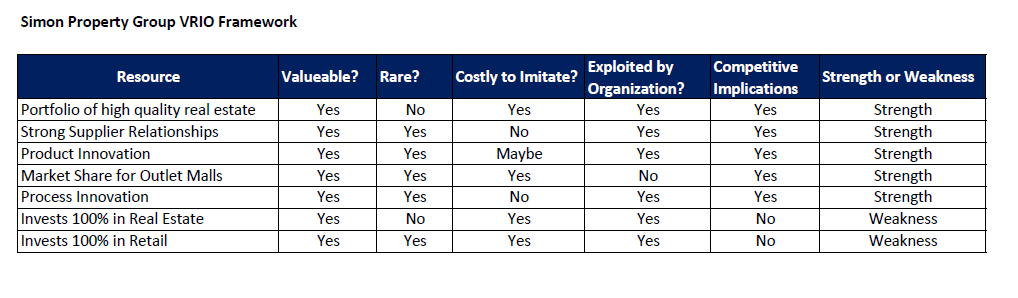
I will begin with analyzing Simon’s portfolio of high quality real estate. Is having a portfolio of high quality resource a value to Simon or potential threat? This was is a little obvious, it is a strength. In real estate their are two types of investors: 1) value-add 2) quality. Value-add investors have tremendous potential of taking a dilapidated property and renovating it and taking (hypothetically) $100 and turning it into $1,000,000. Quality investors focus on properties in prime markets with quality tenants that have low risk of default, these are typically REIT’s (real estate investment trusts) that are investing on behalf of institutional investors and guaranteeing a dividend on their investment.
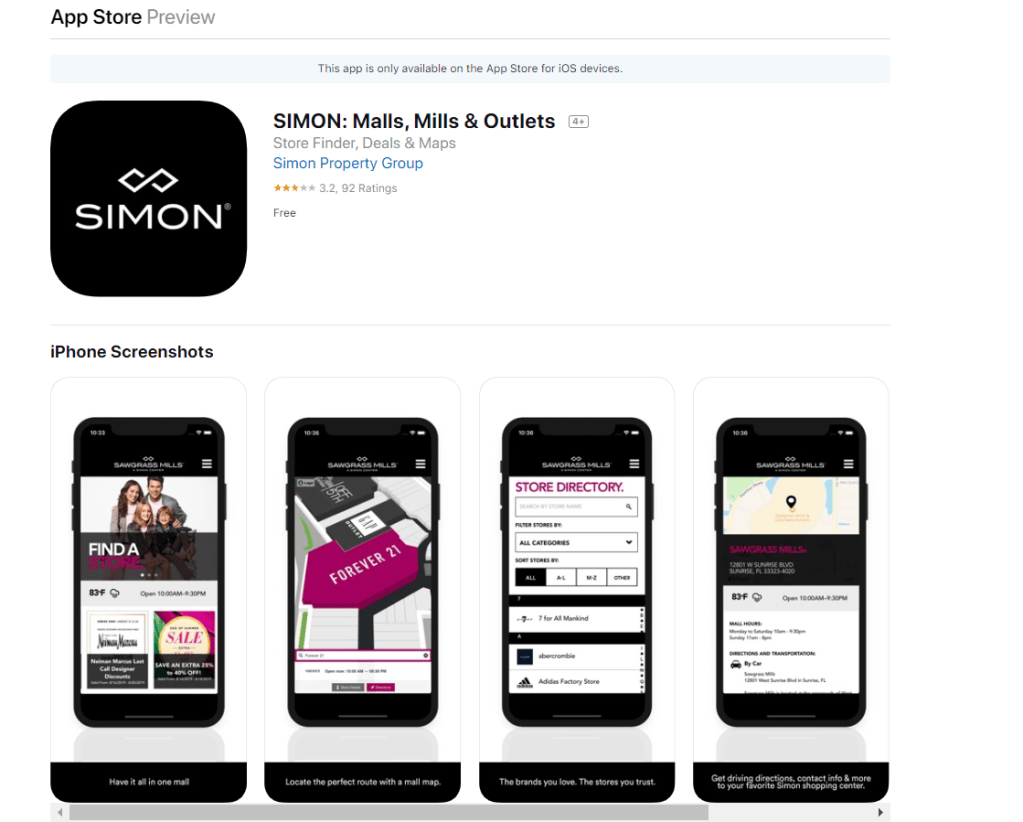
If we look to another resource like product/process innovation we can also analyze if it is a strength or weakness. When a company innovates a product/process in real estate, it can generally be replicated by another firm. Example: Simon built a mobile application that allows shoppers to browse their malls, locate stores/restaurants, and see any/all sales. This was not available before Simon brought it to the market place and became a game changer for the company.
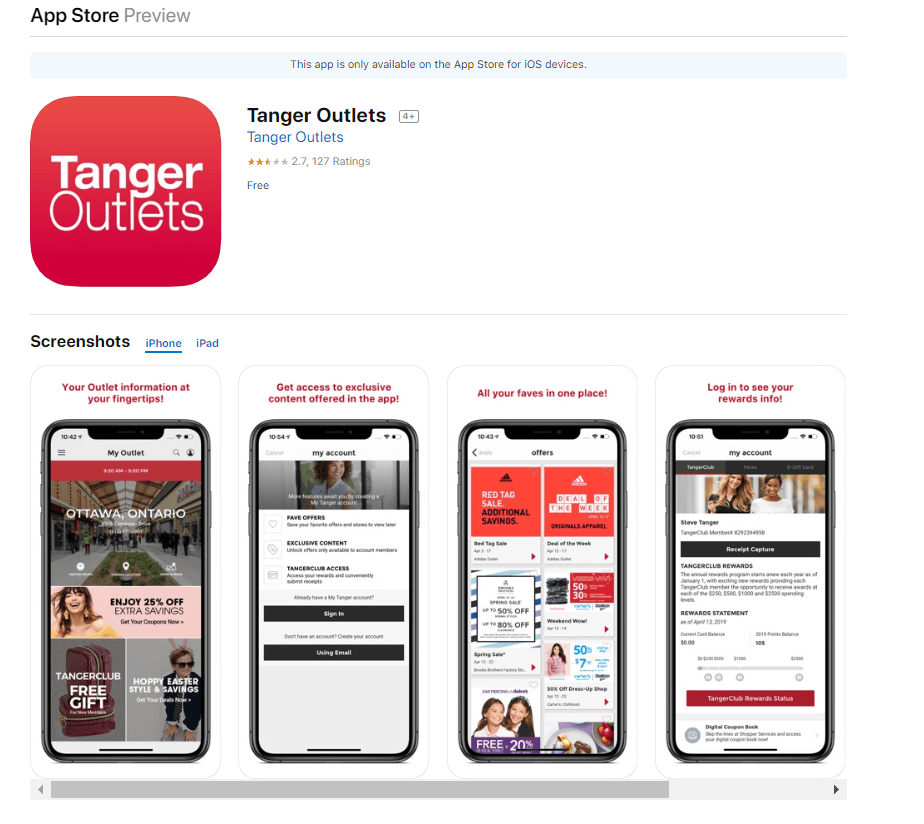
Just like anything good, it always comes in twos and shortly after their largest competitor Tanger Outlets followed in their footsteps and did the exact same thing.
Product and process innovation could be both a strength and weakness since you are the company spending the money and resources innovating only to have it copied by someone and they spend substantially less and keep the net profit, however first to market does have its advantages and for that reason I am saying it is a strength.
Simon Property Group is a real estate investment company and therefore all of their business is focused on the investment of commercial real estate, which in itself makes it focused and an expert in its field, however it also opens the company to fluctuations in the marketplace.
In 2007 I was studying real estate at the University of Arizona and my professor brought in a real estate developer to talk about one of his master plan projects. This developer was discussing his pro-forma assumptions and saying how if “you build it they will come.” I raised my 21 year old hand up and said “what about when the next recession hits and they don’t come?” The developer laughed and said “great question, have you looked at the stock market lately? There are signs that lead to a recession and we are not headed towards one anytime soon so the assumption is still applicable.” 18 months later that developer was probably biting his own words trying to figure out how to survive one of the darkest periods in real estate history.
Investing in real estate has its pros and cons. The pro is you are an expert and typically know your market. It is very expensive to copy others investment moves and requires a lot of capital, however because you build a Class A property on the corner of X and Y street does not prohibit your competitor from doing the exact same thing across the street. Also, as can be seen today, government actions like tariffs can drastically affect your outlook and require you to alter your business model. Change in consumer behavior (like online shopping) can also rapidly change and all of a sudden what you thought was a high quality investment has turned into an investment full of bankrupt tenants.
Simon has done a great job focusing on their good resources and growing them, like innovation and market share or building strong and lasting relationships with their national tenants. For that reason I believe them to be healthy and have more strengths than weaknesses, at least for the areas I focused on.
 Simon Property Group
Leave a comment